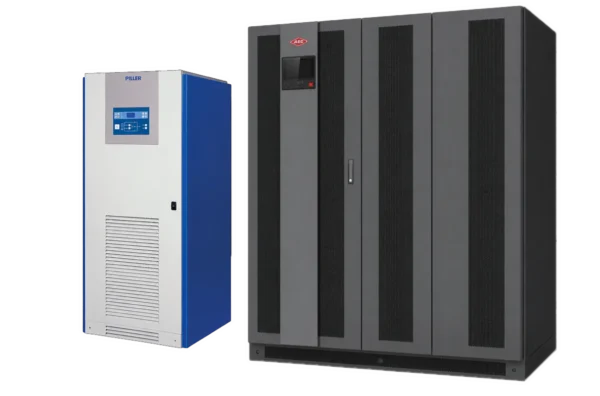
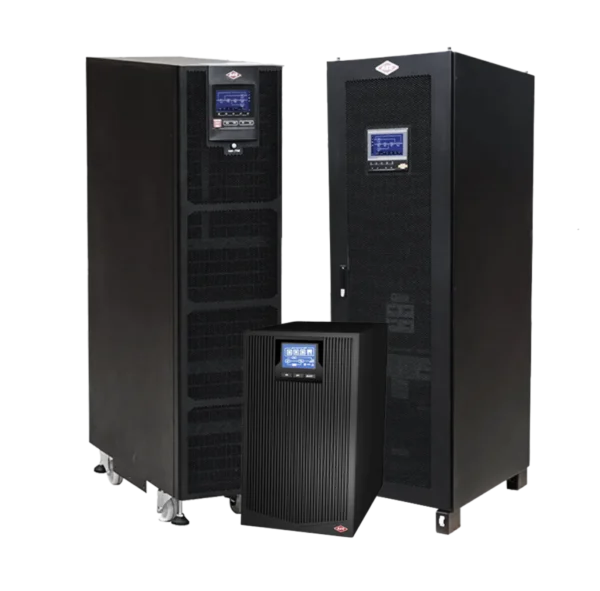
Uninterruptible power supplies (UPS) – are devices that ensure uninterrupted power supply to vital equipment when the main power supply is interrupted. They protect your computers, servers, data centers and other sensitive electronics from damage due to voltage surges, fluctuations or complete power outages. Ensure the security of your data and the uninterrupted operation of business processes.
An uninterruptible power supply (UPS) is a device that provides immediate backup power when the power supply drops or is interrupted. UPS protects computers, servers, telecommunications equipment, and other critical devices from damaging power disturbances. In addition to providing emergency power, a UPS typically provides a variety of power conditioning benefits, protecting connected equipment from voltage spikes, noise, frequency fluctuations, and other power quality problems.
How does an uninterruptible power supply work?
The UPS constantly monitors the quality of the incoming electrical power. When the system detects deviations from the normal frequency or voltage, it automatically switches to battery power - this happens within a few milliseconds. The main component of the UPS is the battery (usually a sealed lead-acid battery or lithium-ion battery). The battery is charged from the AC mains, and during discharge, an inverter converts the DC current back to AC. The battery capacity determines how long the UPS can power the connected equipment in the event of a power outage. The time can vary from a few minutes to several hours, depending on the load and battery capacity.
How to choose the right UPS for your needs?
When choosing a UPS, it is important to consider the following criteria: Power (VA and W) - calculate the total power of the connected equipment in watts and choose a UPS with at least 20% higher rated power. Runtime - determine how long the equipment needs to be powered in the event of a power outage so that you can safely shut down the systems or continue working. Form factor - office UPSs can be compact desktop (tower) type, while rack-mount UPSs are used in server rooms. Battery type - lead-acid batteries are the cheapest, but lithium-ion batteries last longer and are lighter. Communication interfaces - modern UPSs have USB, RS-232 or network (SNMP) interfaces for automatic system shutdown.
UPS advantages and applications
UPSs are an integral part of modern IT infrastructure. In offices, they protect computers and network equipment from unexpected power outages and data loss. In data centers, rack-mounted UPSs ensure the continuous operation of servers. In industry, UPSs protect production equipment and automated control systems. In medical facilities, they are critical for the operation of life-support equipment. Investing in a reliable UPS protects against costly data loss, equipment failure, and business losses due to power outages.
Invertas, UAB has become the official JUMO distributor in Lithuania – new opportunities for the country's industry. The Lithuanian industrial sector is rapidly modernizing, and the automation, measurement...
Powerful 560kW VACON 100 FLOW – now at Kauno Energija's Petrašiūnai power plant! Kauno Energija has recently installed one of the largest Danfoss VACON 100...
Accurate steam flow measurement with Orifice Plate: Invertas, UAB implemented the solution in Rietavas veterinary sanitation Invertas, UAB, an official Fuji Electric Premium partner...