
Home > Products > DC power supply > Battery chargers
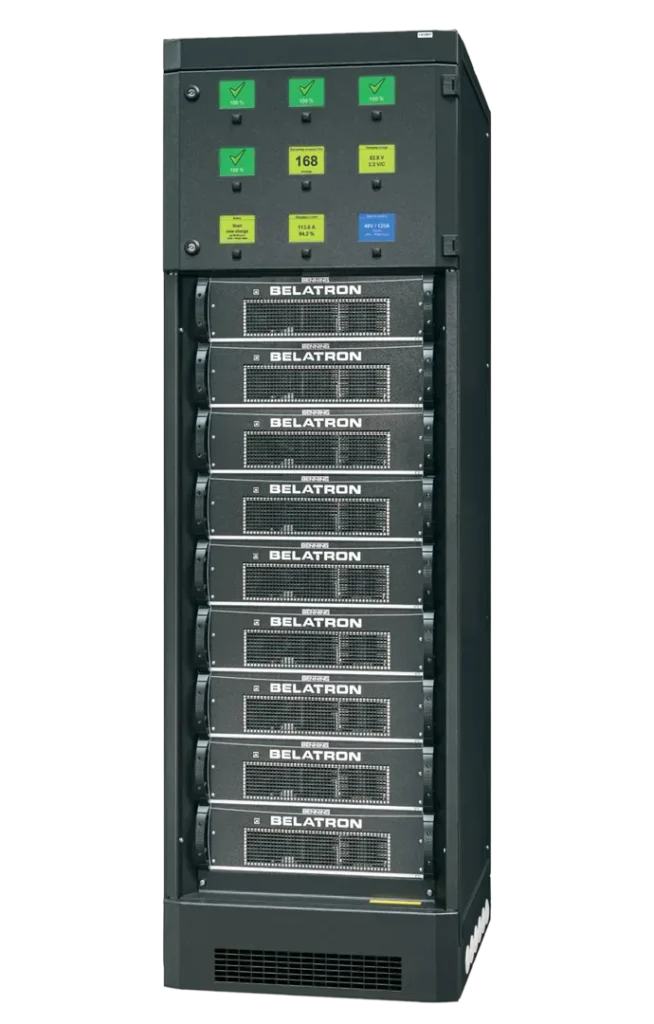
Battery chargers
Efficient chargers for stationary and traction batteries — longer battery life and lower costs.
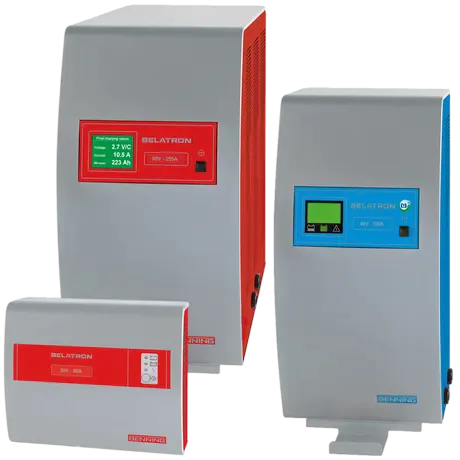
The highest quality of every product
Local services near you
Customer service every step of the way
Smooth technical communication
Battery Charger Buying Guide
Battery chargers are specialized electrical equipment designed to efficiently and safely charge various types of batteries in industrial, traction and stationary applications. The correctly selected charger ensures long battery life, safety and optimal energy consumption management.


What is a battery charger?
A battery charger is an electronic device that converts alternating current (AC) from the mains to direct current (DC) and supplies it to charge the battery. Modern industrial chargers use high-frequency converter technology (HF), which provides efficiency of up to 94 % and more, low weight and compact design. Chargers differ in technology: traditional transformer, high-frequency (HF) and discharge compensation (DEC) chargers.
Advantages of battery chargers
Modern battery chargers have many advantages: High efficiency - high-frequency technology achieves up to 94% efficiency, reducing electricity costs. Automatic charging control - IU, IUIa and W charging characteristics are optimally adapted to different types of batteries. Battery safety - temperature compensation and controlled equalization charging extend the service life of batteries. Diagnostics - integrated diagnostic functions detect battery failures at an early stage. Network interfaces - CAN-Bus, Modbus, WLAN connection for centralized monitoring and control.

How does a battery charger work?
The battery charger operates in several stages: The converter module converts the mains alternating current into high-frequency pulses and then into direct current. The control electronics constantly monitor the battery voltage, current and temperature. The charging algorithm automatically selects the optimal charging characteristic (IU, IUIa or W). When a full charge is reached, the charger switches to maintenance mode, protecting against overcharging. Integrated data logging allows for analysis of charging cycles and battery condition.
How to choose a battery charger?
When choosing a battery charger, consider the following factors: Battery type - lead-acid (gel, AGM, flooded), lithium-ion (Li-Ion) or nickel-cadmium (NiCd). Capacity and voltage - the charger's output voltage must match the battery's nominal voltage (24 V, 48 V, 80 V, etc.). Charging current - select a current of 10-20 % battery capacity (Ah) for optimal charging time. Environmental conditions - IP protection class for sealed and outdoor conditions. Certificates and standards - EN 50272, IEC 60254 compliance with safety requirements.
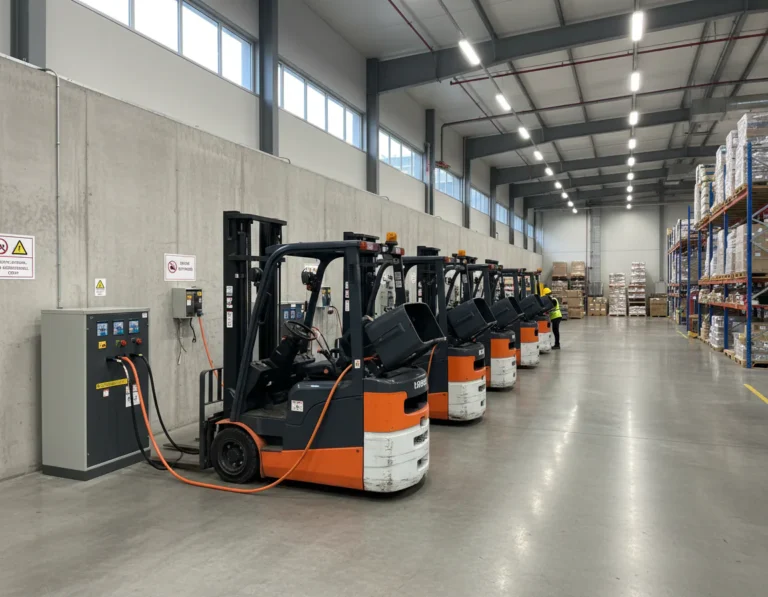
Application areas of battery chargers
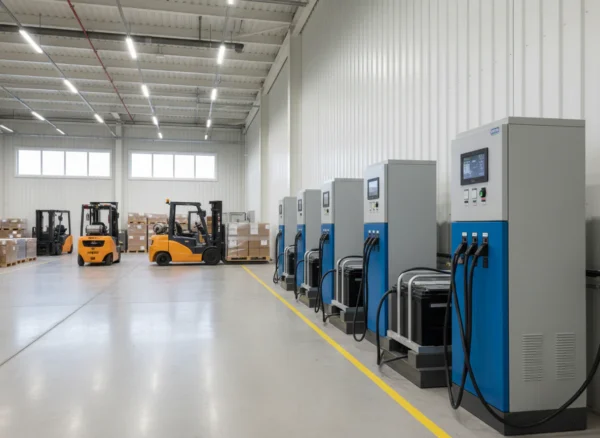
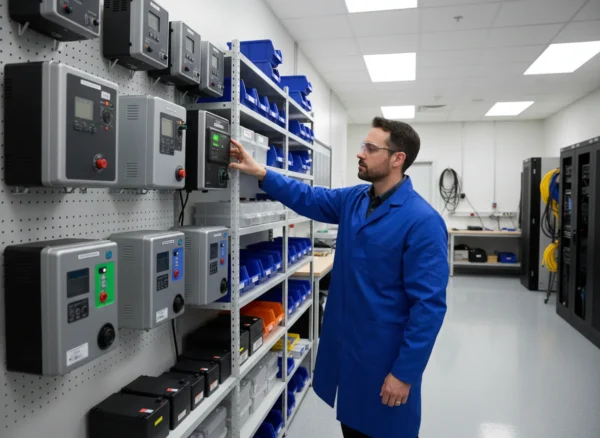
Battery chargers are widely used in various sectors: Traction batteries - electric forklifts, sweepers, platform trucks in warehouses and manufacturing. Telecom and data centers - charging batteries for uninterruptible power systems (UPS). Electric power - maintenance of batteries for control systems and protection relays. Transport - battery charging infrastructure for electric buses, trains and ships. Renewable energy - battery management for solar and wind energy storage systems.
RELATED ARTICLES

New JUMO representative – new opportunities for the country's industry
Company news
May 25, 2026
Invertas, UAB has become the official JUMO distributor in Lithuania – new opportunities for the country's industry. The Lithuanian industrial sector is rapidly modernizing, and the automation, measurement...
More
Powerful 560kW VACON 100 FLOW – already at Petrašiūnai power plant!
Company news
January 20, 2026
Powerful 560kW VACON 100 FLOW – now at Kauno Energija's Petrašiūnai power plant! Kauno Energija has recently installed one of the largest Danfoss VACON 100...
More