Home > Products > DC power supply > AC/DC rectifiers

AC/DC rectifiers
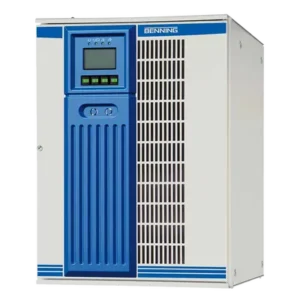
Converting alternating current into stable direct current with battery charging — reliable backup power.


AC/DC rectifiers
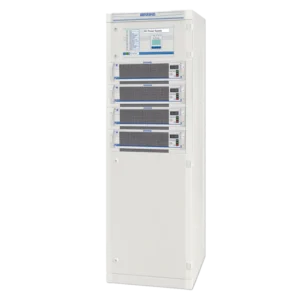
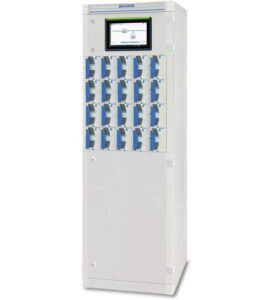
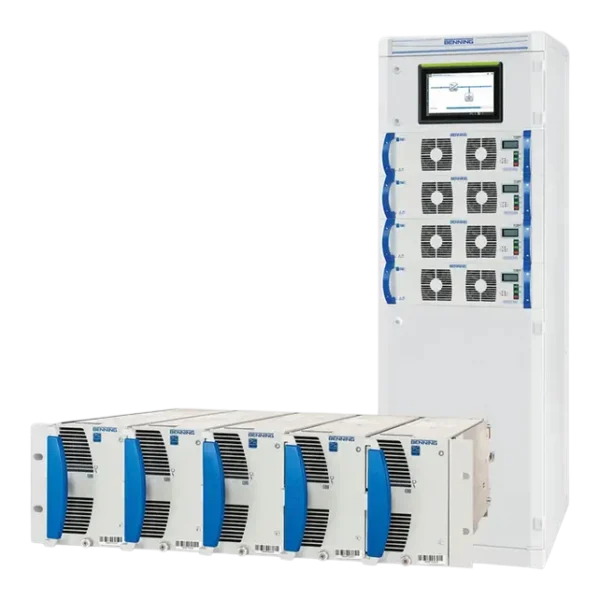
BENNING ADC modular – modular AC/DC rectifier system, 300–2400 W

AC/DC rectifiers
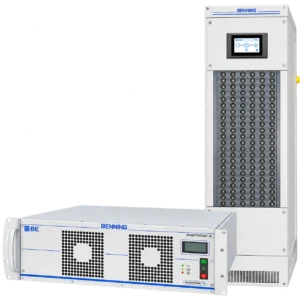
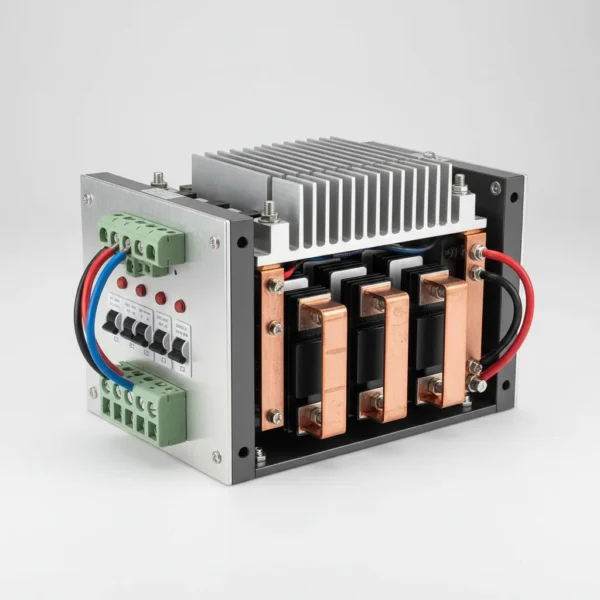
BENNING TEBECHOP 4000 Convection – convection cooled AC/DC rectifier module, 4 kW

AC/DC rectifiers
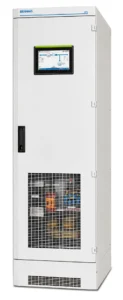
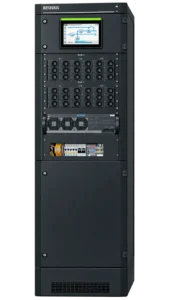
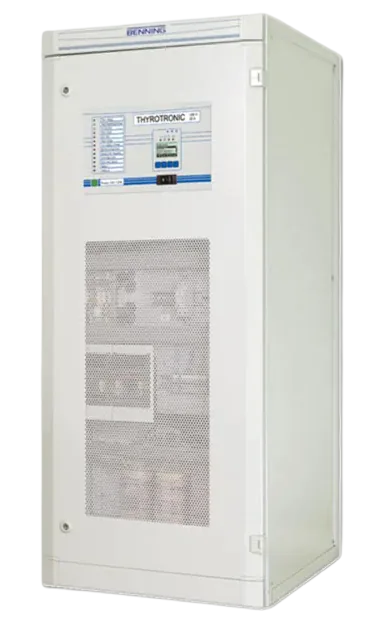
BENNING THYROTRONIC – thyristor AC/DC rectifier for stationary battery systems

AC/DC rectifiers
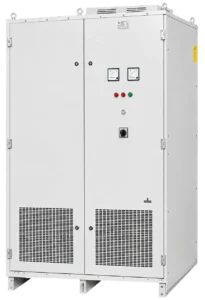
BENNING rectifiers for nuclear power plants – rectifier for stationary battery systems (KTA)

AC/DC rectifiers
BENNING Telecom Rectifier Series SE – SLIMLINE SE and TEBECHOP 13500 SE rectifiers for telecommunications

AC/DC rectifiers
BENNING TEBECHOP SE – modular AC/DC rectifier system, 1–13.5 kW modules

AC/DC rectifiers
BENNING Telecom Rectifier Series NG - SLIMLINE 2000 NG and 3000 NG rectifiers for telecommunications

AC/DC rectifiers
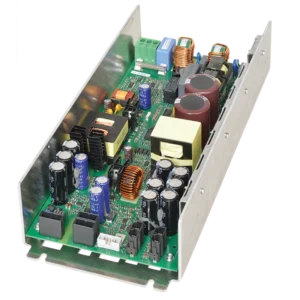
BENNING OEM power supplies – switching AC/DC power supplies and DC converters 250–5000 W
The highest quality of every product
Local services near you
Customer service every step of the way
Smooth technical communication
AC/DC rectifiers – reliable conversion of alternating current to direct current
AC/DC rectifiers are electronic devices designed to convert alternating current (AC) to direct current (DC). They are widely used in industry, telecommunications, energy and consumer electronics. A properly selected rectifier ensures stable voltage supply and long-term operation of the equipment.


What are AC/DC rectifiers?
AC/DC rectifiers convert alternating current to direct current using diode circuits or thyristor-controlled circuits. They are classified by the number of phases (single-phase, three-phase), waveform (half-wave, full-wave), and control type (uncontrolled, semi-controlled, fully controlled). Modern rectifiers have high efficiencies - often above 95%.
How do AC/DC rectifiers work?
Rectifiers work by using the property of diodes to conduct current in only one direction. A single-phase full-wave rectifier uses 4 diodes forming a Gretz bridge - this eliminates the negative side of the current and produces a rippled DC current. Additionally, capacitors and filters smooth out the ripple and provide a more stable output voltage.


Advantages and applications of AC/DC rectifiers
AC/DC rectifiers are essential in many sectors: telecommunications (for powering base stations), industry (for controlling CNC machines), renewable energy systems (in solar inverter circuits), and electric vehicle charging. The main advantages are: high efficiency, compact design, and wide operating temperature ranges.
How to choose the right AC/DC rectifier?
When choosing an AC/DC rectifier, it is important to consider: output voltage and current (according to load requirements), input voltage range (110V/220V/380V), protection classes (IP rating), efficiency and heat dissipation, and compliance with standards (CE, UL, RoHS). Three-phase rectifiers are recommended for industrial use - they provide greater stability and lower ripple.


Use of AC/DC rectifiers
AC/DC rectifiers are widely used in various sectors: telecommunications (for powering base stations), industry (for controlling CNC machines), renewable energy systems (in solar inverter circuits), and electric vehicle charging. The main advantages are: high efficiency, compact design, and wide operating temperature ranges.
RELATED ARTICLES
Danfoss iC7 HVACR ULH – the first project in Lithuania
Invertas, UAB installed the first Danfoss iC7 HVACR Ultra Low Harmonic frequency converter in Lithuania. UAB "Invertas" has taken another step in installing...
More
New JUMO representative – new opportunities for the country's industry
Invertas, UAB has become the official JUMO distributor in Lithuania – new opportunities for the country's industry. The Lithuanian industrial sector is rapidly modernizing, and the automation, measurement...
More